







-
 Agriculture
-
 Health-Care
-
 Environment
-
 Construction-Real-Estate
-
 Tools-Hardware
-
 Home-Garden
-
 Furniture
-
 Luggage-Bags-Cases
-
 Medical-devices-Supplies
-
 Gifts-Crafts
-
 Sports-Entertainment
-
 Food-Beverage
-
 Vehicles-Transportation
-
 Power-Transmission
-
 Material-Handling
-
 Renewable-Energy
-
 Safety
-
 Testing-Instrument-Equipment
-
 Construction-Building-Machinery
-
 Pet-Supplies
-
 Personal-Care-Household-Cleaning
-
 Vehicle-Accessories-Electronics-Tools
-
 School-Office-Supplies
-
 Packaging-Printing
-
 Mother-Kids-Toys
-
 Business-Services
-
 Commercial-Equipment-Machinery
-
 Apparel-Accessories
-
 Security
-
 Shoes-Accessories
-
 Vehicle-Parts-Accessories
-
 Jewelry-Eyewear-Watches-Accessories
-
 Lights-Lighting
-
 Fabric-Textile-Raw-Material
-
 Fabrication-Services
-
 Industrial-Machinery
-
 Consumer-Electronics
-
 Electrical-Equipment-Supplies
-
 Electronic-Components-Accessories-Telecommunications
-
 Home-Appliances
-
 Beauty
-
 Chemicals
-
 Rubber-Plastics
-
 Metals-Alloys


























































































































































































































































































































































































































































































































































































- Masonry Materials
- Curtain Walls & Accessories
- Earthwork Products
- Fireproofing Materials
- Heat Insulation Materials
- Plastic Building Materials
- Building Boards
- Soundproofing Materials
- Timber
- Waterproofing Materials
- Balustrades & Handrails
- Bathroom & Kitchen
- Flooring & Accessories
- Tiles & Accessories
- Door, Window & Accessories
- Fireplaces & Stoves
- Floor Heating Systems & Parts
- Stairs & Stair Parts
- Ceilings
- Elevators & Escalators
- Stone
- Countertops, Vanity Tops & Table Tops
- Mosaics
- Metal Building Materials
- Multifunctional Materials
- Ladders & Scaffoldings
- Mouldings
- Corner Guards
- Decorative Films
- Formwork
- Building & Industrial Glass
- Other Construction & Real Estate
- Wallpapers/Wall panels
- HVAC System & Parts
- Outdoor Facilities
- Prefabricated Buildings
- Festive & Party Supplies
- Bathroom Products
- Household Sundries
- Rain Gear
- Garden Supplies
- Household Cleaning Tools & Accessories
- Lighters & Smoking Accessories
- Home Storage & Organization
- Household Scales
- Smart Home Improvement
- Home Textiles
- Kitchenware
- Drinkware & Accessories
- Dinnerware, Coffee & Wine
- Home Decor
- Golf
- Fitness & Body Building
- Amusement Park Facilities
- Billiards, Board Game,Coin Operated Games
- Musical Instruments
- Outdoor Affordable Luxury Sports
- Camping & Hiking
- Fishing
- Sports Safety&Rehabilitation
- Ball Sports Equipments
- Water Sports
- Winter Sports
- Luxury Travel Equipments
- Sports Shoes, Bags & Accessories
- Cycling
- Other Sports & Entertainment Products
- Artificial Grass&Sports Flooring&Sports Court Equipment
- Scooters
- Food Ingredients
- Honey & Honey Products
- Snacks
- Nuts & Kernels
- Seafood
- Plant & Animal Oil
- Beverages
- Fruit & Vegetable Products
- Frog & Escargot
- Bean Products
- Egg Products
- Dairy Products
- Seasonings & Condiments
- Canned Food
- Instant Food
- Baked Goods
- Other Food & Beverage
- Meat & Poultry
- Confectionery
- Grain Products
- Feminie Care
- Hair Care & Styling
- Body Care
- Hands & Feet Care
- Hygiene Products
- Men's Grooming
- Laundry Cleaning Supplies
- Travel Size & Gift Sets
- Room Deodorizers
- Other Personal Care Products
- Pest Control Products
- Special Household Cleaning
- Floor Cleaning
- Kitchen & Bathroom Cleaning
- Oral Care
- Bath Supplies
- Yellow Pages
- Correction Supplies
- Office Binding Supplies
- Office Cutting Supplies
- Board Erasers
- Office Adhesives & Tapes
- Education Supplies
- Pencil Cases & Bags
- Notebooks & Writing Pads
- File Folder Accessories
- Calendars
- Writing Accessories
- Commercial Office Supplies
- Pencil Sharpeners
- Pens
- Letter Pad/Paper
- Paper Envelopes
- Desk Organizers
- Pencils
- Markers & Highlighters
- Filing Products
- Art Supplies
- Easels
- Badge Holder & Accessories
- Office Paper
- Printer Supplies
- Book Covers
- Other Office & School Supplies
- Stationery Set
- Boards
- Clipboards
- Stamps
- Drafting Supplies
- Stencils
- Electronic Dictionary
- Books
- Map
- Magazines
- Calculators
- Baby & Toddler Toys
- Educational Toys
- Classic Toys
- Dress Up & Pretend Play
- Toy Vehicle
- Stuffed Animals & Plush Toys
- Outdoor Toys & Structures
- Balloons & Accessories
- Baby Food
- Children's Clothing
- Baby Supplies & Products
- Maternity Clothes
- Kids Shoes
- Baby Care
- Novelty & Gag Toys
- Dolls & Accessories
- Puzzle & Games
- Blocks & Model Building Toys
- Toddler Clothing
- Baby Clothing
- Kids' Luggage & Bags
- Arts, Crafts & DIY Toys
- Action & Toy Figures
- Baby Appliances
- Hobbies & Models
- Remote Control Toys
- Promotional Toys
- Pregnancy & Maternity
- Hygiene Products
- Kid's Textile&Bedding
- Novelty & Special Use
- Toy Weapons
- Baby Gifts
- Baby Storage & Organization
- Auto Drive Systems
- ATV/UTV Parts & Accessories
- Marine Parts & Accessories
- Other Auto Parts
- Trailer Parts & Accessories
- Auto Transmission Systems
- Train Parts & Accessories
- Universal Parts
- Railway Parts & Accessories
- Auto Brake Systems
- Aviation Parts & Accessories
- Truck Parts & Accessories
- Auto Suspension Systems
- Auto Lighting Systems
- New Energy Vehicle Parts & Accessories
- Auto Steering Systems
- Wheels, Tires & Accessories
- Bus Parts & Accessories
- Auto Performance Parts
- Cooling System
- Go-Kart & Kart Racer Parts & Accessories
- Air Conditioning Systems
- Heavy Duty Vehicle Parts & Accessories
- Auto Electrical Systems
- Auto Body Systems
- Auto Engine Systems
- Container Parts & Accessories
- Motorcycle Parts & Accessories
- Refrigeration & Heat Exchange Equipment
- Machine Tool Equipment
- Food & Beverage Machinery
- Agricultural Machinery & Equipment
- Apparel & Textile Machinery
- Chemical Machinery
- Packaging Machines
- Paper Production Machinery
- Plastic & Rubber Processing Machinery
- Industrial Robots
- Electronic Products Machinery
- Metal & Metallurgy Machinery
- Woodworking Machinery
- Home Product Manufacturing Machinery
- Machinery Accessories
- Environmental Machinery
- Machinery Service
- Electrical Equipment Manufacturing Machinery
- Industrial Compressors & Parts
- Tobacco & Cigarette Machinery
- Production Line
- Used Industrial Machinery
- Electronics Production Machinery
- Other Machinery & Industrial Equipment
- Camera, Photo & Accessories
- Portable Audio, Video & Accessories
- Television, Home Audio, Video & Accessories
- Video Games & Accessories
- Mobile Phone & Accessories
- Electronic Publications
- Earphone & Headphone & Accessories
- Speakers & Accessories
- Smart Electronics
- TV Receivers & Accessories
- Mobile Phone & Computer Repair Parts
- Chargers, Batteries & Power Supplies
- Used Electronics
- VR, AR, MR Hardware & Software
- Projectors & Presentation Equipments
- Other Consumer Electronics
- Cables & Commonly Used Accessories
- Computer Hardware & Software
- Displays, Signage and Optoelectronics
- Discrete Semiconductors
- Wireless & IoT Module and Products
- Telecommunications
- Connectors, Terminals & Accessories
- Development Boards, Electronic Modules and Kits
- Circuit Protection
- Sensors
- Isolators
- Audio Components and Products
- Integrated Circuits
- Power Supplies
- Relays
- RF, Microwave and RFID
- Electronic Accessories & Supplies
- Passive Components
- PCB & PCBA
- Air Quality Appliances
- Home Appliance Parts
- Heating & Cooling Appliances
- Small Kitchen Appliances
- Laundry Appliances
- Water Heaters
- Water Treatment Appliances
- Refrigerators & Freezers
- Personal Care & Beauty Appliances
- Major Kitchen Appliances
- Cleaning Appliances
- Second-hand Appliances
- Smart Home Appliances
- Other Home Appliances
- Energy Chemicals
- Inorganic Chemicals
- Basic Organic Chemicals
- Agrochemicals
- Admixture & Additives
- Catalysts & Chemical Auxiliary Agents
- Pigments & Dyestuff
- Coating & Paint
- Daily Chemicals
- Polymer
- Organic Intermediate
- Adhesives & Sealants
- Chemical Waste
- Biological Chemical Products
- Surface Treatment Chemicals
- Painting & Coating
- Chemical Reagents
- Flavor & Fragrance
- Non-Explosive Demolition Agents
- Other Chemicals
- Custom Chemical Services


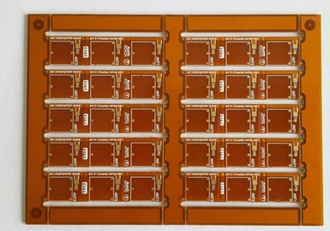
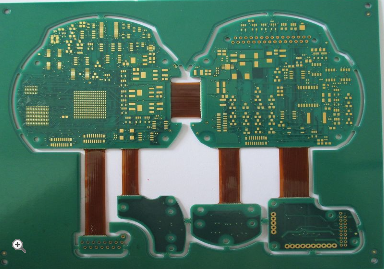
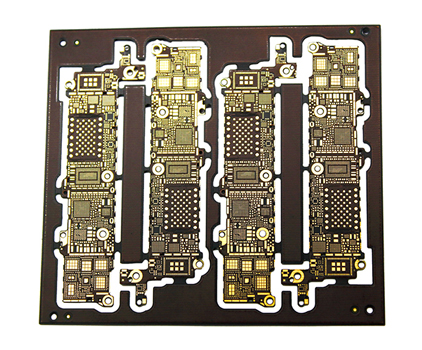
Innovative Flexible Edge Plating Board For High Performance Electronics And Compact Applications
In the rapidly evolving landscape of electronics, the demand for higher performance in increasingly compact devices has never been greater. From wearable technology and medical implants to advanced aerospace systems and next-generation smartphones, engineers face the constant challenge of packing more functionality into smaller, more complex form factors. Traditional printed circuit boards (PCBs), while reliable, often fall short in meeting the stringent requirements of modern high-density, high-speed applications due to limitations in space, weight, and interconnect reliability. It is within this context that the Innovative Flexible Edge Plating Board emerges as a transformative solution. This technology represents a significant leap forward, combining the benefits of flexible circuits with enhanced edge connectivity to enable robust, high-performance electronics in the most space-constrained environments. By reimagining how circuits are interconnected at their boundaries, this innovation opens new doors for design freedom, signal integrity, and mechanical resilience, capturing the interest of designers and manufacturers aiming to push the boundaries of what's possible.
Enhanced Electrical Performance and Signal Integrity
The core advantage of the Innovative Flexible Edge Plating Board lies in its superior electrical characteristics. Traditional connection methods, such as soldered wires or connectors, can introduce parasitic inductance, capacitance, and resistance, which degrade signal quality, especially at high frequencies. The edge plating technique involves depositing a continuous conductive layer, typically copper followed by a protective finish like gold or tin, along the trimmed edge of a flexible circuit. This creates a seamless, low-resistance electrical path directly from the circuit traces to the edge of the board.
This direct metallization significantly reduces impedance discontinuities and signal loss. For high-speed digital signals or sensitive analog circuits, maintaining signal integrity is paramount. The edge-plated connection provides a more controlled impedance environment compared to discrete connectors, minimizing reflections and crosstalk. Furthermore, the robust plating ensures stable electrical performance under mechanical flexing or vibration, a common scenario in compact, portable devices. This reliability is crucial for applications like high-frequency communication modules, advanced sensor arrays, and data acquisition systems where consistent performance is non-negotiable.
Unparalleled Space Efficiency and Design Flexibility
One of the most compelling drivers for adopting flexible edge plating technology is the relentless push for miniaturization. In compact applications, every cubic millimeter counts. Traditional board-to-board connectors consume valuable vertical (Z-axis) space and require a dedicated footprint on the PCB. The Innovative Flexible Edge Plating Board eliminates the need for these bulky connectors entirely.
The connection is made directly via the board's edge, allowing for ultra-thin, stackable, or foldable configurations. This enables designers to create three-dimensional electronic assemblies that conform to irregular shapes, such as those found in wearable devices, endoscopic cameras, or tightly packed drone avionics. The flexible substrate itself, often polyimide, can be bent and folded during installation, while the edge plating ensures the connection points remain reliable. This fusion of flexibility and direct edge connectivity liberates designers from the constraints of rigid, rectangular boards and standard connectors, fostering innovation in product form factors and system architecture.
Superior Mechanical Robustness and Reliability
Durability is a critical concern, especially for electronics deployed in harsh or dynamic environments. The Innovative Flexible Edge Plating Board offers significant mechanical advantages over conventional interconnect solutions. A soldered connector or a press-fit header represents a potential point of failure; solder joints can crack under thermal cycling or vibration, and connectors can become unseated.
In contrast, the plated edge connection is monolithic and integral to the circuit board. The metallization is bonded directly to the substrate, creating a joint that is highly resistant to shock, vibration, and repeated flexing. This makes it ideal for automotive electronics, industrial robotics, and mobile devices that experience constant movement or stress. Additionally, the connection interface is often simpler, potentially requiring just a clamping mechanism or conductive elastomer, reducing the number of parts and potential failure modes. The result is a more reliable and longer-lasting electronic assembly, which is essential for mission-critical and safety-related applications.
Streamlined Manufacturing and Assembly Processes
From a production standpoint, the Innovative Flexible Edge Plating Board can simplify manufacturing and reduce overall costs. The process of creating edge-plated flexible circuits is well-integrated into standard PCB fabrication workflows. After the flexible circuit is patterned and etched, the panel is precisely routed or scored, and then the exposed edges undergo a specialized plating process to build up the conductive layer.
This integration means the connector functionality is built directly into the board, eliminating the need for procuring, inventorying, and assembling separate connector components. This reduces the bill of materials (BOM), minimizes assembly steps, and lowers the risk of errors during manual soldering or placement. The subsequent assembly of the final product becomes more straightforward, as the flexible boards can be directly plugged into mating sockets or clamped into place. This efficiency not only cuts costs but also accelerates time-to-market for new, compact electronic products.
Broad Application Spectrum and Future Potential
The versatility of the Innovative Flexible Edge Plating Board ensures its relevance across a wide array of industries. In consumer electronics, it enables slimmer smartphones, foldable displays, and compact true wireless earbuds with enhanced audio circuitry. The medical field benefits through miniaturized diagnostic probes, implantable devices, and disposable health monitors where reliability and size are life-critical.
In the automotive sector, this technology supports the dense network of sensors and control units in advanced driver-assistance systems (ADAS) and electric vehicle powertrains, where space is at a premium and reliability is mandatory. Aerospace and defense applications leverage its light weight and resilience for avionics and communication systems. Looking ahead, as the Internet of Things (IoT) and edge computing continue to proliferate, the demand for small, robust, and high-performance interconnect solutions will only grow. The Innovative Flexible Edge Plating Board is poised to be a foundational technology, enabling further integration and sophistication in the electronic devices that will shape the future.
REPORT