







-
 Agriculture
-
 Health-Care
-
 Environment
-
 Construction-Real-Estate
-
 Tools-Hardware
-
 Home-Garden
-
 Furniture
-
 Luggage-Bags-Cases
-
 Medical-devices-Supplies
-
 Gifts-Crafts
-
 Sports-Entertainment
-
 Food-Beverage
-
 Vehicles-Transportation
-
 Power-Transmission
-
 Material-Handling
-
 Renewable-Energy
-
 Safety
-
 Testing-Instrument-Equipment
-
 Construction-Building-Machinery
-
 Pet-Supplies
-
 Personal-Care-Household-Cleaning
-
 Vehicle-Accessories-Electronics-Tools
-
 School-Office-Supplies
-
 Packaging-Printing
-
 Mother-Kids-Toys
-
 Business-Services
-
 Commercial-Equipment-Machinery
-
 Apparel-Accessories
-
 Security
-
 Shoes-Accessories
-
 Vehicle-Parts-Accessories
-
 Jewelry-Eyewear-Watches-Accessories
-
 Lights-Lighting
-
 Fabric-Textile-Raw-Material
-
 Fabrication-Services
-
 Industrial-Machinery
-
 Consumer-Electronics
-
 Electrical-Equipment-Supplies
-
 Electronic-Components-Accessories-Telecommunications
-
 Home-Appliances
-
 Beauty
-
 Chemicals
-
 Rubber-Plastics
-
 Metals-Alloys


























































































































































































































































































































































































































































































































































































- Masonry Materials
- Curtain Walls & Accessories
- Earthwork Products
- Fireproofing Materials
- Heat Insulation Materials
- Plastic Building Materials
- Building Boards
- Soundproofing Materials
- Timber
- Waterproofing Materials
- Balustrades & Handrails
- Bathroom & Kitchen
- Flooring & Accessories
- Tiles & Accessories
- Door, Window & Accessories
- Fireplaces & Stoves
- Floor Heating Systems & Parts
- Stairs & Stair Parts
- Ceilings
- Elevators & Escalators
- Stone
- Countertops, Vanity Tops & Table Tops
- Mosaics
- Metal Building Materials
- Multifunctional Materials
- Ladders & Scaffoldings
- Mouldings
- Corner Guards
- Decorative Films
- Formwork
- Building & Industrial Glass
- Other Construction & Real Estate
- Wallpapers/Wall panels
- HVAC System & Parts
- Outdoor Facilities
- Prefabricated Buildings
- Festive & Party Supplies
- Bathroom Products
- Household Sundries
- Rain Gear
- Garden Supplies
- Household Cleaning Tools & Accessories
- Lighters & Smoking Accessories
- Home Storage & Organization
- Household Scales
- Smart Home Improvement
- Home Textiles
- Kitchenware
- Drinkware & Accessories
- Dinnerware, Coffee & Wine
- Home Decor
- Golf
- Fitness & Body Building
- Amusement Park Facilities
- Billiards, Board Game,Coin Operated Games
- Musical Instruments
- Outdoor Affordable Luxury Sports
- Camping & Hiking
- Fishing
- Sports Safety&Rehabilitation
- Ball Sports Equipments
- Water Sports
- Winter Sports
- Luxury Travel Equipments
- Sports Shoes, Bags & Accessories
- Cycling
- Other Sports & Entertainment Products
- Artificial Grass&Sports Flooring&Sports Court Equipment
- Scooters
- Food Ingredients
- Honey & Honey Products
- Snacks
- Nuts & Kernels
- Seafood
- Plant & Animal Oil
- Beverages
- Fruit & Vegetable Products
- Frog & Escargot
- Bean Products
- Egg Products
- Dairy Products
- Seasonings & Condiments
- Canned Food
- Instant Food
- Baked Goods
- Other Food & Beverage
- Meat & Poultry
- Confectionery
- Grain Products
- Feminie Care
- Hair Care & Styling
- Body Care
- Hands & Feet Care
- Hygiene Products
- Men's Grooming
- Laundry Cleaning Supplies
- Travel Size & Gift Sets
- Room Deodorizers
- Other Personal Care Products
- Pest Control Products
- Special Household Cleaning
- Floor Cleaning
- Kitchen & Bathroom Cleaning
- Oral Care
- Bath Supplies
- Yellow Pages
- Correction Supplies
- Office Binding Supplies
- Office Cutting Supplies
- Board Erasers
- Office Adhesives & Tapes
- Education Supplies
- Pencil Cases & Bags
- Notebooks & Writing Pads
- File Folder Accessories
- Calendars
- Writing Accessories
- Commercial Office Supplies
- Pencil Sharpeners
- Pens
- Letter Pad/Paper
- Paper Envelopes
- Desk Organizers
- Pencils
- Markers & Highlighters
- Filing Products
- Art Supplies
- Easels
- Badge Holder & Accessories
- Office Paper
- Printer Supplies
- Book Covers
- Other Office & School Supplies
- Stationery Set
- Boards
- Clipboards
- Stamps
- Drafting Supplies
- Stencils
- Electronic Dictionary
- Books
- Map
- Magazines
- Calculators
- Baby & Toddler Toys
- Educational Toys
- Classic Toys
- Dress Up & Pretend Play
- Toy Vehicle
- Stuffed Animals & Plush Toys
- Outdoor Toys & Structures
- Balloons & Accessories
- Baby Food
- Children's Clothing
- Baby Supplies & Products
- Maternity Clothes
- Kids Shoes
- Baby Care
- Novelty & Gag Toys
- Dolls & Accessories
- Puzzle & Games
- Blocks & Model Building Toys
- Toddler Clothing
- Baby Clothing
- Kids' Luggage & Bags
- Arts, Crafts & DIY Toys
- Action & Toy Figures
- Baby Appliances
- Hobbies & Models
- Remote Control Toys
- Promotional Toys
- Pregnancy & Maternity
- Hygiene Products
- Kid's Textile&Bedding
- Novelty & Special Use
- Toy Weapons
- Baby Gifts
- Baby Storage & Organization
- Auto Drive Systems
- ATV/UTV Parts & Accessories
- Marine Parts & Accessories
- Other Auto Parts
- Trailer Parts & Accessories
- Auto Transmission Systems
- Train Parts & Accessories
- Universal Parts
- Railway Parts & Accessories
- Auto Brake Systems
- Aviation Parts & Accessories
- Truck Parts & Accessories
- Auto Suspension Systems
- Auto Lighting Systems
- New Energy Vehicle Parts & Accessories
- Auto Steering Systems
- Wheels, Tires & Accessories
- Bus Parts & Accessories
- Auto Performance Parts
- Cooling System
- Go-Kart & Kart Racer Parts & Accessories
- Air Conditioning Systems
- Heavy Duty Vehicle Parts & Accessories
- Auto Electrical Systems
- Auto Body Systems
- Auto Engine Systems
- Container Parts & Accessories
- Motorcycle Parts & Accessories
- Refrigeration & Heat Exchange Equipment
- Machine Tool Equipment
- Food & Beverage Machinery
- Agricultural Machinery & Equipment
- Apparel & Textile Machinery
- Chemical Machinery
- Packaging Machines
- Paper Production Machinery
- Plastic & Rubber Processing Machinery
- Industrial Robots
- Electronic Products Machinery
- Metal & Metallurgy Machinery
- Woodworking Machinery
- Home Product Manufacturing Machinery
- Machinery Accessories
- Environmental Machinery
- Machinery Service
- Electrical Equipment Manufacturing Machinery
- Industrial Compressors & Parts
- Tobacco & Cigarette Machinery
- Production Line
- Used Industrial Machinery
- Electronics Production Machinery
- Other Machinery & Industrial Equipment
- Camera, Photo & Accessories
- Portable Audio, Video & Accessories
- Television, Home Audio, Video & Accessories
- Video Games & Accessories
- Mobile Phone & Accessories
- Electronic Publications
- Earphone & Headphone & Accessories
- Speakers & Accessories
- Smart Electronics
- TV Receivers & Accessories
- Mobile Phone & Computer Repair Parts
- Chargers, Batteries & Power Supplies
- Used Electronics
- VR, AR, MR Hardware & Software
- Projectors & Presentation Equipments
- Other Consumer Electronics
- Cables & Commonly Used Accessories
- Computer Hardware & Software
- Displays, Signage and Optoelectronics
- Discrete Semiconductors
- Wireless & IoT Module and Products
- Telecommunications
- Connectors, Terminals & Accessories
- Development Boards, Electronic Modules and Kits
- Circuit Protection
- Sensors
- Isolators
- Audio Components and Products
- Integrated Circuits
- Power Supplies
- Relays
- RF, Microwave and RFID
- Electronic Accessories & Supplies
- Passive Components
- PCB & PCBA
- Air Quality Appliances
- Home Appliance Parts
- Heating & Cooling Appliances
- Small Kitchen Appliances
- Laundry Appliances
- Water Heaters
- Water Treatment Appliances
- Refrigerators & Freezers
- Personal Care & Beauty Appliances
- Major Kitchen Appliances
- Cleaning Appliances
- Second-hand Appliances
- Smart Home Appliances
- Other Home Appliances
- Energy Chemicals
- Inorganic Chemicals
- Basic Organic Chemicals
- Agrochemicals
- Admixture & Additives
- Catalysts & Chemical Auxiliary Agents
- Pigments & Dyestuff
- Coating & Paint
- Daily Chemicals
- Polymer
- Organic Intermediate
- Adhesives & Sealants
- Chemical Waste
- Biological Chemical Products
- Surface Treatment Chemicals
- Painting & Coating
- Chemical Reagents
- Flavor & Fragrance
- Non-Explosive Demolition Agents
- Other Chemicals
- Custom Chemical Services

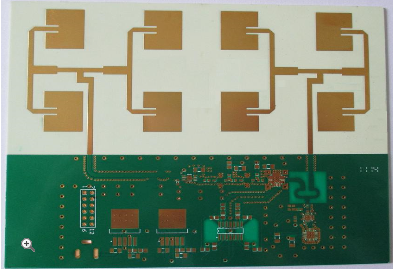
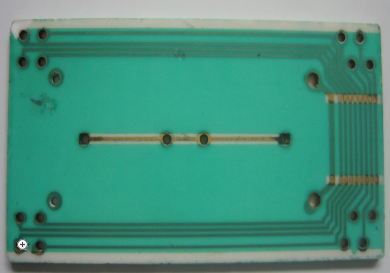
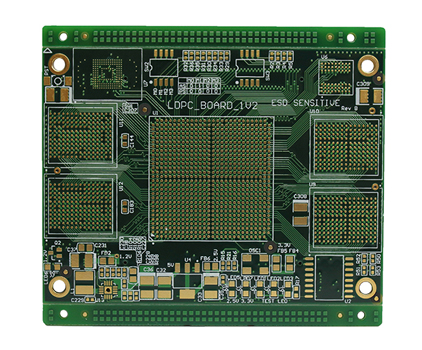
High Frequency PCB Solutions For Aerospace Defense And Medical Devices Where Precision Signal Integrity And Stability Are Paramount
In the rapidly advancing fields of aerospace, defense, and medical technology, the demand for electronic systems that operate with unparalleled precision, reliability, and speed has never been greater. At the heart of these critical applications lies a component often overlooked yet fundamentally essential: the printed circuit board (PCB). However, these are not ordinary PCBs; they are sophisticated high-frequency PCB solutions engineered to manage signals in the gigahertz range and beyond. Whether it's guiding a satellite, processing radar data for national security, or ensuring the accurate imaging of a medical MRI scanner, the integrity and stability of the signal transmitted across these boards are paramount. Any distortion, loss, or interference can lead to catastrophic failures, misdiagnoses, or compromised missions. This article delves into the specialized world of high-frequency PCBs, exploring the materials, design philosophies, and manufacturing rigors that make them the unsung heroes enabling technological marvels where failure is not an option.
The Critical Role of Advanced Dielectric Materials
The foundation of any high-frequency PCB is its substrate material. Standard FR-4 epoxy-glass laminates, while cost-effective for consumer electronics, are inadequate for high-frequency applications due to their inconsistent dielectric constant (Dk) and high dissipation factor (Df), which lead to significant signal loss and phase distortion at elevated frequencies. In aerospace, defense, and medical devices, engineers turn to advanced engineered materials. Polytetrafluoroethylene (PTFE)-based substrates, such as Rogers RO4000® series or Taconic RF-35, are prevalent. These materials offer a stable and predictable Dk across a wide frequency and temperature range, which is crucial for maintaining consistent impedance. Their exceptionally low Df minimizes signal attenuation, ensuring that weak signals from a radar receiver or a sensitive biomedical sensor are not lost within the board itself.
Furthermore, the thermal management properties of these materials are vital. Aerospace and defense systems often operate in extreme environmental swings, from the cold vacuum of space to the heat within an aircraft's avionics bay. High-frequency laminates must exhibit a low coefficient of thermal expansion (CTE) to maintain dimensional stability. A mismatch in CTE between the substrate and the copper layers can cause delamination or cracked vias during thermal cycling, leading to intermittent failures. For implantable medical devices, biocompatibility and long-term stability inside the human body are additional, non-negotiable material constraints that guide the selection process, making material science a cornerstone of high-frequency PCB solutions.
Precision Design for Controlled Impedance and Signal Integrity
Designing a high-frequency PCB is an exercise in electromagnetic precision. The primary goal is to create a transmission line environment where signals propagate with minimal reflection, radiation, or coupling. This begins with meticulous controlled impedance routing. Trace width, thickness, and the distance to the reference plane must be calculated with extreme accuracy based on the substrate's Dk to achieve the target impedance (typically 50 or 100 ohms). Any deviation acts as an impedance discontinuity, causing signal reflections that degrade integrity. In a phased-array radar system, for instance, timing differences measured in picoseconds between channels are critical; impedance mismatches can desynchronize the array, drastically reducing its resolution and accuracy.
Beyond single traces, the entire board layout must combat crosstalk and electromagnetic interference (EMI). Designers employ techniques like strategic layer stacking, with dedicated ground planes to provide shielding and a clear return path for high-speed signals. Differential pair routing is used extensively for high-speed data buses, ensuring signals are immune to common-mode noise. In medical devices like digital X-ray or PET scanners, which detect extremely low-level signals, shielding sensitive analog sections from noisy digital components on the same board is a critical design challenge. The use of buried and blind vias helps in optimizing space in dense designs while minimizing stub lengths that can cause signal reflections, showcasing how design intricacy directly correlates to system performance.
The Manufacturing Imperative: Tolerances and Reliability
The most elegant high-frequency PCB design is only as good as its physical realization. Manufacturing these boards demands capabilities far beyond standard commercial fabrication. Etching tolerance is perhaps the most critical. The precise trace geometries required for controlled impedance must be reproduced faithfully, often requiring tolerances of ±0.02 mm or better. Advanced etching processes, like plasma etching for PTFE materials, are employed to achieve clean, vertical sidewalls on traces, as rough edges can increase conductor loss and skin effect at high frequencies. The plating of through-holes and vias must be uniform and void-free to ensure reliable electrical connections and thermal conductivity, especially for boards that will dissipate significant heat from power amplifiers in radar transmitters.
Reliability testing is exhaustive and tailored to the end-use environment. Aerospace and defense PCBs undergo rigorous qualification including thermal shock cycling, vibration testing, and humidity resistance checks to meet standards like MIL-PRF-31032 and IPC-6012 Class 3. These tests simulate years of operation in harsh conditions to screen for potential failures. For medical devices, especially those classified as life-supporting, manufacturing occurs in controlled environments with stringent traceability (lot tracking of materials, process parameters) to comply with ISO 13485 standards. The soldermask and surface finish (often Electroless Nickel Immersion Gold for excellent solderability and wire-bonding capability) are also chosen for their performance at high frequencies and long-term reliability, closing the loop from design to a robust, field-ready component.
Applications Driving Innovation and Future Trends
The relentless push for higher performance in end-use applications directly fuels innovation in high-frequency PCB technology. In aerospace and defense, the advent of active electronically scanned array (AESA) radars, electronic warfare (EW) systems, and satellite communications (SATCOM) demands PCBs that can handle wider bandwidths and higher power levels. This drives the development of hybrid boards that combine different dielectric materials within a single stack-up (mixed-dielectric designs) to optimize performance for various circuit functions, such as combining a low-loss material for RF front-ends with a more rigid material for digital sections.
In the medical field, the trend towards higher-field MRI scanners (moving from 1.5T to 3T and 7T) requires RF coil PCBs that operate at correspondingly higher frequencies with exceptional signal-to-noise ratio. The miniaturization of diagnostic and implantable devices, like cardiac monitors and neural stimulators, pushes the boundaries of high-density interconnect (HDI) technology within high-frequency constraints. Looking forward, the integration of additive manufacturing techniques for embedding passive components and the exploration of new substrate materials like liquid crystal polymer (LCP) for ultra-flexible, high-frequency applications are on the horizon. As the Internet of Things (IoT) expands into critical areas, the lessons and technologies from aerospace, defense, and medical high-frequency PCBs will become increasingly vital for ensuring signal integrity and stability in an ever-more connected and data-driven world.
REPORT