







-
 Agriculture
-
 Health-Care
-
 Environment
-
 Construction-Real-Estate
-
 Tools-Hardware
-
 Home-Garden
-
 Furniture
-
 Luggage-Bags-Cases
-
 Medical-devices-Supplies
-
 Gifts-Crafts
-
 Sports-Entertainment
-
 Food-Beverage
-
 Vehicles-Transportation
-
 Power-Transmission
-
 Material-Handling
-
 Renewable-Energy
-
 Safety
-
 Testing-Instrument-Equipment
-
 Construction-Building-Machinery
-
 Pet-Supplies
-
 Personal-Care-Household-Cleaning
-
 Vehicle-Accessories-Electronics-Tools
-
 School-Office-Supplies
-
 Packaging-Printing
-
 Mother-Kids-Toys
-
 Business-Services
-
 Commercial-Equipment-Machinery
-
 Apparel-Accessories
-
 Security
-
 Shoes-Accessories
-
 Vehicle-Parts-Accessories
-
 Jewelry-Eyewear-Watches-Accessories
-
 Lights-Lighting
-
 Fabric-Textile-Raw-Material
-
 Fabrication-Services
-
 Industrial-Machinery
-
 Consumer-Electronics
-
 Electrical-Equipment-Supplies
-
 Electronic-Components-Accessories-Telecommunications
-
 Home-Appliances
-
 Beauty
-
 Chemicals
-
 Rubber-Plastics
-
 Metals-Alloys


























































































































































































































































































































































































































































































































































































- Masonry Materials
- Curtain Walls & Accessories
- Earthwork Products
- Fireproofing Materials
- Heat Insulation Materials
- Plastic Building Materials
- Building Boards
- Soundproofing Materials
- Timber
- Waterproofing Materials
- Balustrades & Handrails
- Bathroom & Kitchen
- Flooring & Accessories
- Tiles & Accessories
- Door, Window & Accessories
- Fireplaces & Stoves
- Floor Heating Systems & Parts
- Stairs & Stair Parts
- Ceilings
- Elevators & Escalators
- Stone
- Countertops, Vanity Tops & Table Tops
- Mosaics
- Metal Building Materials
- Multifunctional Materials
- Ladders & Scaffoldings
- Mouldings
- Corner Guards
- Decorative Films
- Formwork
- Building & Industrial Glass
- Other Construction & Real Estate
- Wallpapers/Wall panels
- HVAC System & Parts
- Outdoor Facilities
- Prefabricated Buildings
- Festive & Party Supplies
- Bathroom Products
- Household Sundries
- Rain Gear
- Garden Supplies
- Household Cleaning Tools & Accessories
- Lighters & Smoking Accessories
- Home Storage & Organization
- Household Scales
- Smart Home Improvement
- Home Textiles
- Kitchenware
- Drinkware & Accessories
- Dinnerware, Coffee & Wine
- Home Decor
- Golf
- Fitness & Body Building
- Amusement Park Facilities
- Billiards, Board Game,Coin Operated Games
- Musical Instruments
- Outdoor Affordable Luxury Sports
- Camping & Hiking
- Fishing
- Sports Safety&Rehabilitation
- Ball Sports Equipments
- Water Sports
- Winter Sports
- Luxury Travel Equipments
- Sports Shoes, Bags & Accessories
- Cycling
- Other Sports & Entertainment Products
- Artificial Grass&Sports Flooring&Sports Court Equipment
- Scooters
- Food Ingredients
- Honey & Honey Products
- Snacks
- Nuts & Kernels
- Seafood
- Plant & Animal Oil
- Beverages
- Fruit & Vegetable Products
- Frog & Escargot
- Bean Products
- Egg Products
- Dairy Products
- Seasonings & Condiments
- Canned Food
- Instant Food
- Baked Goods
- Other Food & Beverage
- Meat & Poultry
- Confectionery
- Grain Products
- Feminie Care
- Hair Care & Styling
- Body Care
- Hands & Feet Care
- Hygiene Products
- Men's Grooming
- Laundry Cleaning Supplies
- Travel Size & Gift Sets
- Room Deodorizers
- Other Personal Care Products
- Pest Control Products
- Special Household Cleaning
- Floor Cleaning
- Kitchen & Bathroom Cleaning
- Oral Care
- Bath Supplies
- Yellow Pages
- Correction Supplies
- Office Binding Supplies
- Office Cutting Supplies
- Board Erasers
- Office Adhesives & Tapes
- Education Supplies
- Pencil Cases & Bags
- Notebooks & Writing Pads
- File Folder Accessories
- Calendars
- Writing Accessories
- Commercial Office Supplies
- Pencil Sharpeners
- Pens
- Letter Pad/Paper
- Paper Envelopes
- Desk Organizers
- Pencils
- Markers & Highlighters
- Filing Products
- Art Supplies
- Easels
- Badge Holder & Accessories
- Office Paper
- Printer Supplies
- Book Covers
- Other Office & School Supplies
- Stationery Set
- Boards
- Clipboards
- Stamps
- Drafting Supplies
- Stencils
- Electronic Dictionary
- Books
- Map
- Magazines
- Calculators
- Baby & Toddler Toys
- Educational Toys
- Classic Toys
- Dress Up & Pretend Play
- Toy Vehicle
- Stuffed Animals & Plush Toys
- Outdoor Toys & Structures
- Balloons & Accessories
- Baby Food
- Children's Clothing
- Baby Supplies & Products
- Maternity Clothes
- Kids Shoes
- Baby Care
- Novelty & Gag Toys
- Dolls & Accessories
- Puzzle & Games
- Blocks & Model Building Toys
- Toddler Clothing
- Baby Clothing
- Kids' Luggage & Bags
- Arts, Crafts & DIY Toys
- Action & Toy Figures
- Baby Appliances
- Hobbies & Models
- Remote Control Toys
- Promotional Toys
- Pregnancy & Maternity
- Hygiene Products
- Kid's Textile&Bedding
- Novelty & Special Use
- Toy Weapons
- Baby Gifts
- Baby Storage & Organization
- Auto Drive Systems
- ATV/UTV Parts & Accessories
- Marine Parts & Accessories
- Other Auto Parts
- Trailer Parts & Accessories
- Auto Transmission Systems
- Train Parts & Accessories
- Universal Parts
- Railway Parts & Accessories
- Auto Brake Systems
- Aviation Parts & Accessories
- Truck Parts & Accessories
- Auto Suspension Systems
- Auto Lighting Systems
- New Energy Vehicle Parts & Accessories
- Auto Steering Systems
- Wheels, Tires & Accessories
- Bus Parts & Accessories
- Auto Performance Parts
- Cooling System
- Go-Kart & Kart Racer Parts & Accessories
- Air Conditioning Systems
- Heavy Duty Vehicle Parts & Accessories
- Auto Electrical Systems
- Auto Body Systems
- Auto Engine Systems
- Container Parts & Accessories
- Motorcycle Parts & Accessories
- Refrigeration & Heat Exchange Equipment
- Machine Tool Equipment
- Food & Beverage Machinery
- Agricultural Machinery & Equipment
- Apparel & Textile Machinery
- Chemical Machinery
- Packaging Machines
- Paper Production Machinery
- Plastic & Rubber Processing Machinery
- Industrial Robots
- Electronic Products Machinery
- Metal & Metallurgy Machinery
- Woodworking Machinery
- Home Product Manufacturing Machinery
- Machinery Accessories
- Environmental Machinery
- Machinery Service
- Electrical Equipment Manufacturing Machinery
- Industrial Compressors & Parts
- Tobacco & Cigarette Machinery
- Production Line
- Used Industrial Machinery
- Electronics Production Machinery
- Other Machinery & Industrial Equipment
- Camera, Photo & Accessories
- Portable Audio, Video & Accessories
- Television, Home Audio, Video & Accessories
- Video Games & Accessories
- Mobile Phone & Accessories
- Electronic Publications
- Earphone & Headphone & Accessories
- Speakers & Accessories
- Smart Electronics
- TV Receivers & Accessories
- Mobile Phone & Computer Repair Parts
- Chargers, Batteries & Power Supplies
- Used Electronics
- VR, AR, MR Hardware & Software
- Projectors & Presentation Equipments
- Other Consumer Electronics
- Cables & Commonly Used Accessories
- Computer Hardware & Software
- Displays, Signage and Optoelectronics
- Discrete Semiconductors
- Wireless & IoT Module and Products
- Telecommunications
- Connectors, Terminals & Accessories
- Development Boards, Electronic Modules and Kits
- Circuit Protection
- Sensors
- Isolators
- Audio Components and Products
- Integrated Circuits
- Power Supplies
- Relays
- RF, Microwave and RFID
- Electronic Accessories & Supplies
- Passive Components
- PCB & PCBA
- Air Quality Appliances
- Home Appliance Parts
- Heating & Cooling Appliances
- Small Kitchen Appliances
- Laundry Appliances
- Water Heaters
- Water Treatment Appliances
- Refrigerators & Freezers
- Personal Care & Beauty Appliances
- Major Kitchen Appliances
- Cleaning Appliances
- Second-hand Appliances
- Smart Home Appliances
- Other Home Appliances
- Energy Chemicals
- Inorganic Chemicals
- Basic Organic Chemicals
- Agrochemicals
- Admixture & Additives
- Catalysts & Chemical Auxiliary Agents
- Pigments & Dyestuff
- Coating & Paint
- Daily Chemicals
- Polymer
- Organic Intermediate
- Adhesives & Sealants
- Chemical Waste
- Biological Chemical Products
- Surface Treatment Chemicals
- Painting & Coating
- Chemical Reagents
- Flavor & Fragrance
- Non-Explosive Demolition Agents
- Other Chemicals
- Custom Chemical Services

Next-Gen Synthetic Leather Coatings: Boosting Performance and Eco-Sustainability
The Shift Toward Sustainable High-Performance Coatings
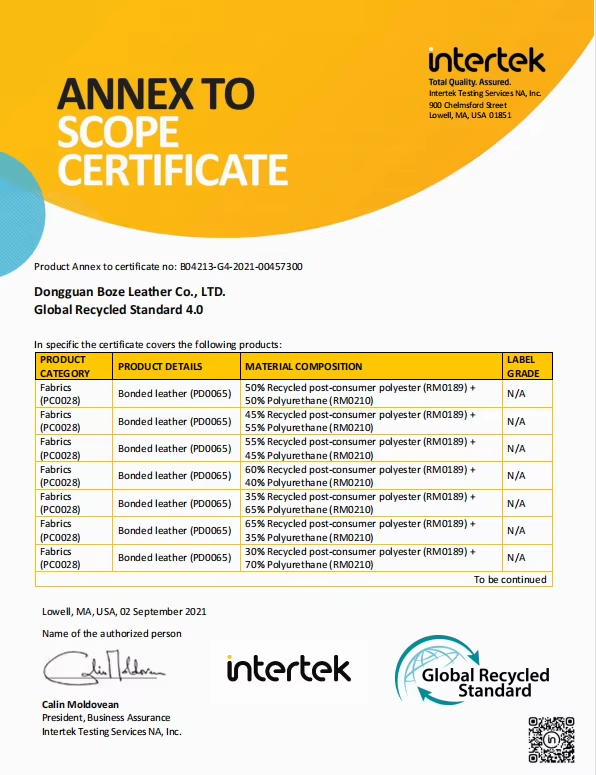
The synthetic leather sector is undergoing a major technological transformation, driven by innovations in solvent-free and water-based polyurethane (PU) formulations. By replacing hazardous traditional chemicals, modern polymer chemistries allow manufacturers to achieve superior abrasion resistance, high tensile strength, and long-lasting hydrolysis protection. These eco-conscious solutions successfully fulfill demanding green standards—such as GRS recycled, USDA bio-based, and OEKO-TEX 100—making them ideal for heavy-duty automotive interiors and premium furniture upholstery.
Key Technical Advantages
- Reduced Environmental Footprint: Water-borne and solvent-free PU matrices eliminate volatile organic compounds (VOCs), ensuring compliance with USDA and GRS environmental protocols.
- Outstanding Durability & Longevity: High-grade microfiber substrates ranging from 0.8 mm to 1.4 mm thick offer exceptional tear resistance, tensile strength, and wear resistance.
- Custom Functional Treatments: Materials can be tailored with anti-UV, flame-retardant, anti-mold, fluorine-free, and anti-bacterial features for specialized applications like automotive seating.
- Tactile Quality & Resilience: Advanced surface structures preserve a supple feel and authentic leather appearance even under severe friction and frequent cleaning routines.
Engineering Principles and Real-World Application
Achieving top-tier synthetic leather involves bonding advanced polymer layers directly onto non-woven microfiber substrates. Industry pioneers like Dongguan Cigno Leather Co., Ltd. utilize extensive R&D experience—supported by more than 30 national invention patents—to formulate solvent-free polymers and water-based PU systems. This sophisticated bonding technique eliminates reliance on toxic cross-linking agents while maximizing physical strength.
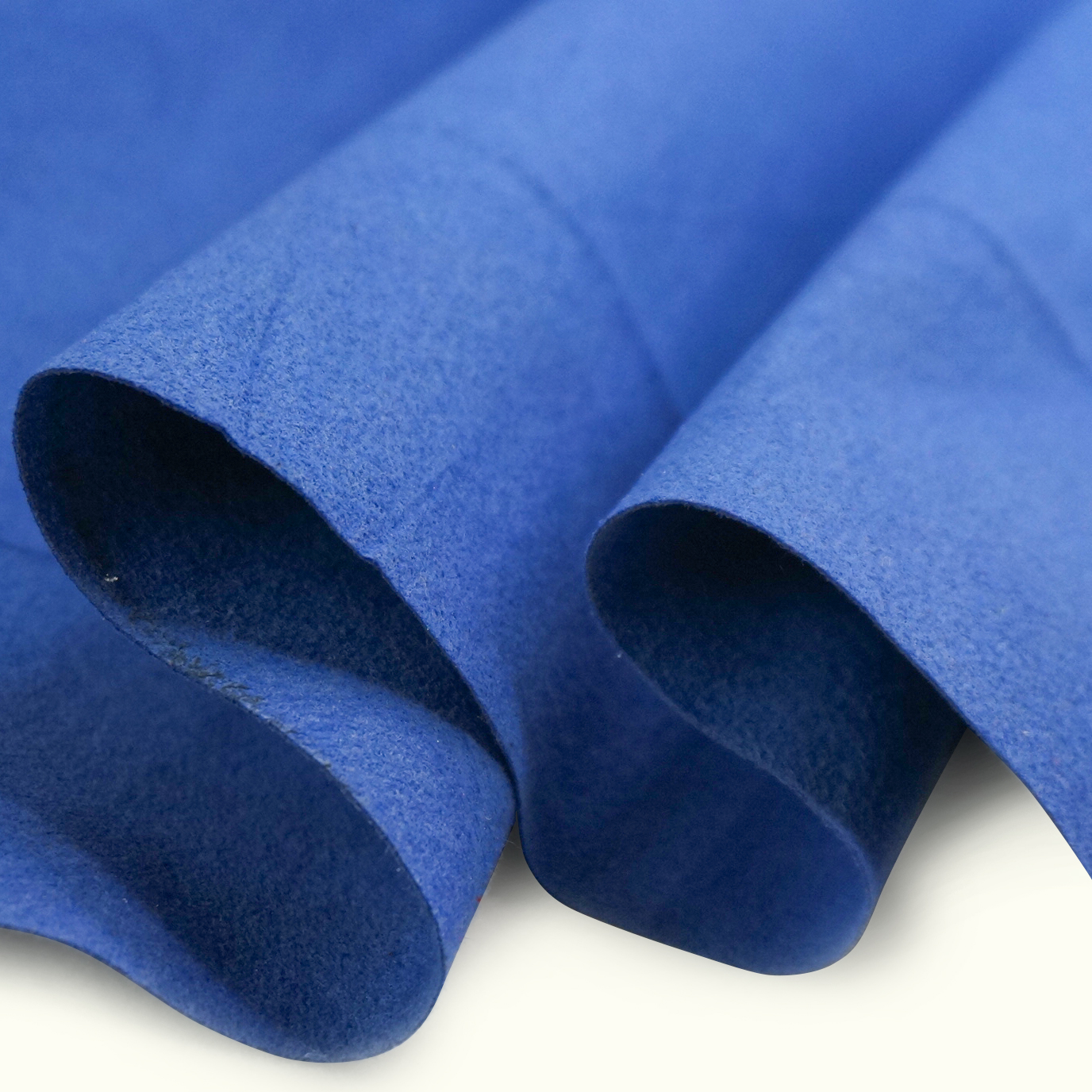
Meeting worldwide environmental standards requires stringent testing. Zero-solvent synthetic leather lines routinely achieve GRS, USDA bio-based, and OEKO-TEX Standard 100 certifications. Furthermore, these materials comply with REACH and RoHS standards, resisting UV degradation, microbial growth, mold, and flammability to withstand the rigorous demands of car seats, armrests, headrests, and interior paneling.
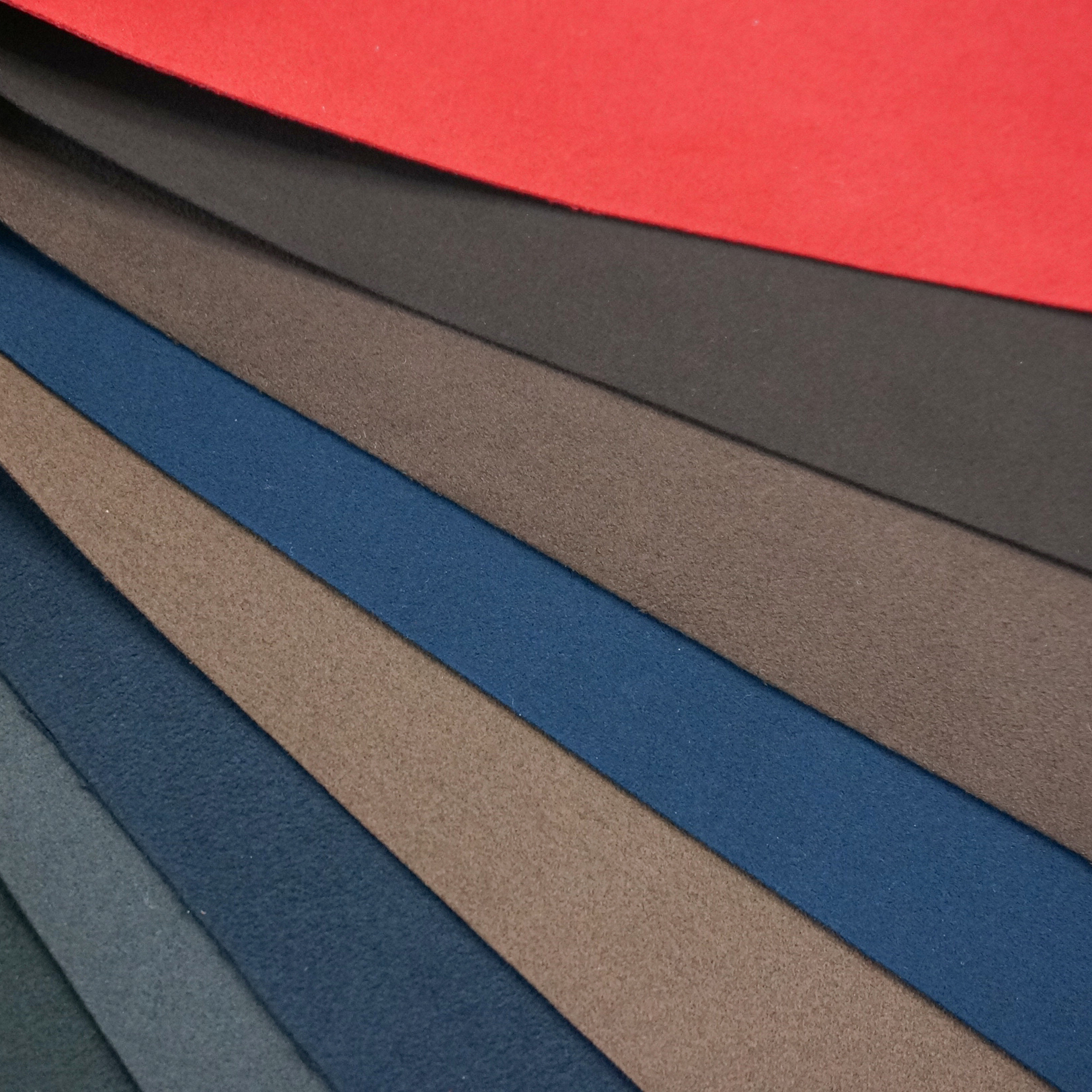
In a recent industrial deployment, an automotive component supplier in Mexico sourced 50,000 meters of customized microfiber synthetic leather for vehicle trim and seat covers. The project demanded strict adherence to low-odor mandates, vibrant color uniformity, flame retardancy, and extreme wear tolerance. The engineered coating ensured zero surface breakdown throughout intense mold fitting and high-stress upholstery steps.
Technical Comparison Table
The following table outlines how engineered microfiber synthetic leather compares against standard solvent-based alternatives across critical performance indicators.
| Property / Parameter | Engineered Microfiber Synthetic Leather | Standard Solvent-Based Leather |
|---|---|---|
| Substrate & Finish | Microfiber Matrix with Water-Based / Zero-Solvent PU Coating | Conventional PVC / Solvent-based PU Layer |
| Thickness Options | 0.8–1.4 mm | 0.6–1.2 mm |
| Standard Width | 54/55 inches | 54 inches |
| Wear & Hydrolysis Life | Superior (Extended durability, easy maintenance) | Moderate |
| Sustainability Standards | GRS, USDA Bio-Based, OEKO-TEX 100, Fluorine-Free, REACH, RoHS | Basic compliance; elevated VOC risk |
| Functional Additives | Anti-UV, Flame Retardant, Anti-Bacterial, Anti-Mold | Limited additive compatibility |
Frequently Asked Questions
In what ways do zero-solvent coatings enhance eco-friendliness?
By eliminating organic solvents from the coating process, zero-solvent technologies drastically minimize VOC emissions. This creates a safer manufacturing workspace, reduces chemical toxicity, and aligns with OEKO-TEX Standard 100 and GRS eco-certifications.
Why is microfiber synthetic leather preferred for vehicle interiors?
Microfiber synthetic leather offers remarkable tear resistance, tensile durability, and scratch defense compared to conventional alternatives. Across thicknesses of 0.8–1.4 mm, it maintains structural integrity under repeated mechanical friction and heavy daily use.
What options are available for custom OEM/ODM production?
Clients can request precise color matching, custom surface grains, specific thickness dimensions, and tailored treatments including UV resistance, flame retardancy, anti-mold properties, and stain-resistant finishes.
Conclusion & Manufacturing Expertise
Adopting advanced eco-friendly coatings ensures exceptional structural durability alongside strict environmental compliance. Certified under ISO 9001 quality management protocols, production processes include comprehensive inspection routines from raw material incoming checks to pre-shipment verification. Flexible minimum order quantities (such as 1,000 meters per color for microfiber orders) are supported by global air and sea freight logistics. For inquiries or technical inquiries, contact the team at vicky@bozeleather.com.
About the Supplier
Founded in 2007, Dongguan Cigno Leather Co., Ltd. operates a 100,000 square meter facility hosting 6 advanced synthetic leather production lines, producing up to 6,000,000 meters per month. Holding GRS, USDA, and OEKO-TEX 100 credentials, the firm manufactures eco-conscious PU, PVC, water-based, and solvent-free materials for automotive and upholstery markets globally.

REPORT